Front Bumper vs Bumper Cover Which Is Best for Your Vehicle
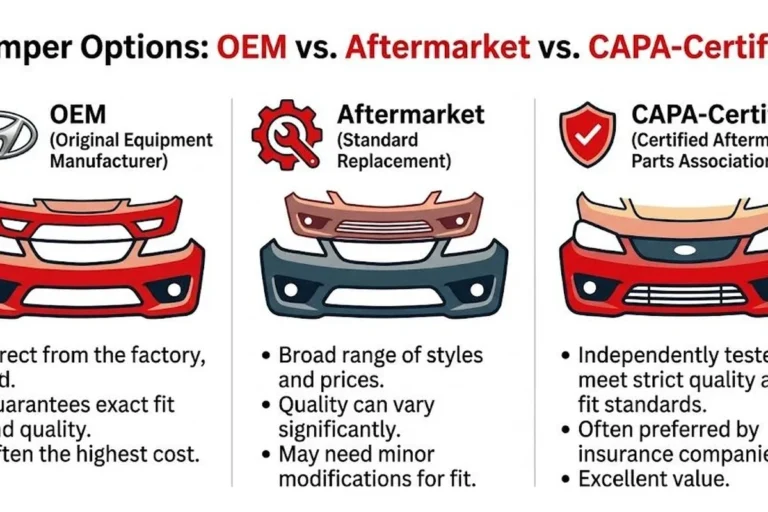
Front bumpers and bumper covers serve different purposes in vehicle design and safety. A front bumper is a structural component designed to absorb impact during collisions, while a bumper cover is primarily cosmetic, designed to enhance the vehicle’s appearance.
Choosing between a front bumper and a bumper cover is essential for vehicle owners. Understanding the differences in functionality and design can impact safety and aesthetics.
This article explores the pros and cons of each option to help you make an informed decision.
- Understanding Front Bumpers and Bumper: Front bumpers and bumper covers serve different purposes in vehicle design and safety..
- Front Bumper vs Bumper Cover: For durability and safety, front bumpers stand out..
- Exploring Bumper Covers: Bumper covers focus on aesthetics and lightweight design..
- Comparison Table: Front Bumper vs.: Here’s a quick comparison of the two options based on key criteria.
- Installation Differences and DIY Considerations: Understanding installation requirements is crucial for anyone considering a replacement..
Understanding Front Bumpers and Bumper Covers
Front bumpers and bumper covers serve different purposes in vehicle design and safety. A front bumper is a structural component designed to absorb impact during collisions, while a bumper cover is primarily cosmetic, designed to enhance the vehicle’s appearance.

Key Considerations for Choosing Between Front Bumper and Bumper Cover
When deciding between a front bumper and a bumper cover, it’s important to weigh the specific factors that will influence your vehicle’s safety and aesthetics.
- Assess your vehicle’s exposure to minor collisions to determine if a front bumper is necessary for enhanced protection.
- Consider the material options: front bumpers are typically made from steel or reinforced plastic, while bumper covers are often made from lighter materials like plastic and fiberglass.
- Evaluate your budget: front bumpers generally have a higher cost due to their durability and safety features compared to more affordable bumper covers.
- Review installation complexity; front bumpers require moderate to high skill and tools for installation, while bumper covers can often be handled with basic hand tools.
| Component | Purpose |
|---|---|
| Front Bumper | Absorbs impact during collisions |
| Bumper Cover | Enhances vehicle’s appearance |
What Are They and Their Main Differences?
The front bumper is typically made from solid materials like steel or reinforced plastic, providing essential safety features.
In contrast, bumper covers are often constructed from lighter materials such as polypropylene or fiberglass, serving mainly to protect the underlying bumper and improve the car’s look. For related context, read best portable jump starter with air compressor.
Front Bumper vs Bumper Cover: Key Features of Front Bumpers
For durability and safety, front bumpers stand out. They are built to withstand a significant amount of force in collisions, which is crucial for protecting both the vehicle and its occupants.
Advantages and Build Quality
Front bumpers are generally thicker and more solid, designed to absorb and dissipate energy during an impact. This quality provides better protection against minor collisions and enhances overall vehicle safety ratings. For official guidance on this, see Consumer Reports car guidance.
They often come equipped with additional features like integrated sensors and mounting points for other equipment.
Safety Considerations
From a safety perspective, a front bumper is essential for minimizing injury during accidents. Its structural integrity is designed to comply with safety standards set by organizations like the IIHS.
Always check your vehicle’s owner’s manual for specific recommendations regarding bumper standards and replacements. This also connects with car starter vs battery before you pay, sign, or book.
For front bumper vs bumper cover, the right call depends on your vehicle, your skill level, and the one spec that decides the job; confirm that spec before you spend money or start the work.
Exploring Bumper Covers
Bumper covers focus on aesthetics and lightweight design. While they do provide some level of protection, their primary function is to enhance the vehicle’s appearance without adding significant weight.
Benefits and Material Options
Bumper covers can be made from various materials, including plastic, fiberglass, and carbon fiber. Each material offers a different balance of weight, cost, and durability. For example, while fiberglass provides a sleek look, plastic is generally more affordable and easier to repair.
Cost-Effectiveness
Bumper covers tend to be less expensive than full front bumpers, making them a popular choice for cosmetic repairs. However, they may not offer the same level of protection, which is a critical factor to consider if safety is a priority. For related context, read car battery charger vs jumper.
Always compare prices and check for warranties before making a purchase.
Compare the deciding spec, build quality, and warranty.
Run the same checks, then compare price and support.
Comparison Table: Front Bumper vs. Bumper Cover
Here’s a quick comparison of the two options based on key criteria:
| Feature | Front Bumper | Bumper Cover |
|---|---|---|
| Material | Steel, reinforced plastic | Plastic, fiberglass |
| Functionality | Structural safety | Aesthetic enhancement |
| Cost | Higher | Lower |
| Installation Complexity | Moderate to high | Lower |
Installation Differences and DIY Considerations
Understanding installation requirements is crucial for anyone considering a replacement. Proper installation ensures that safety and aesthetics are maintained, regardless of your choice. For official guidance on this, see NHTSA vehicle safety guidance.

Tools and Skills Required
Installing a front bumper usually requires a set of tools, including a socket set, screwdrivers, and potentially a torque wrench for proper fastening. Bumper covers often need basic hand tools and can be more manageable for DIY enthusiasts.
Professional vs. DIY Installation
If you lack experience, hiring a professional for front bumper installation is recommended due to the complexity and safety implications. In contrast, bumper covers can often be installed by those with basic automotive knowledge. This connects with car battery charger advance auto parts for related tools and setup context.
Parts and tools wear with use and weather, so judge them on how they hold up after months, not on a single job.
Best-Fit Scenarios for Each Option
Choosing the right component depends on your specific needs and circumstances, including vehicle type, usage, and budget.
When to Choose a Front Bumper
Opt for a front bumper if your vehicle is often exposed to minor collisions, or if you prioritize safety features. This is especially important for SUVs and trucks that might encounter off-road conditions.
When to Opt for a Bumper Cover
A bumper cover is suitable for vehicles primarily used in urban settings where minor aesthetic enhancements are desired over structural integrity. If your vehicle has cosmetic damage, a bumper cover replacement can provide a quick fix. For related context, read parts of a car windshield.
For safety-focused owners, a front bumper is essential. For those looking to enhance aesthetics on a budget, a bumper cover is a viable choice. Consider your vehicle’s usage and potential risks before deciding.
Final Verdict: Which Is Best for Your Vehicle?
Ultimately, the choice between a front bumper and a bumper cover depends on your priorities. If safety and durability are your top concerns, a front bumper is the better option. You can also use external parts of a car as the next practical guide.
However, for cosmetic repairs or enhancements, a bumper cover may be more appropriate.
Front Bumper vs Bumper Cover: Making the Right Choice for Your Vehicle
When deciding between a front bumper and a bumper cover, prioritize safety versus aesthetics based on your vehicle’s usage. If your vehicle frequently encounters minor collisions or requires strong structural integrity, a front bumper is essential.
Conversely, if you’re looking for a cost-effective cosmetic upgrade, a bumper cover may be the better choice. For another head-to-head, read names of car parts interior.
- Assess your vehicle’s exposure to minor collisions to determine if a front bumper is necessary.
- Consider the material options and their impact on durability and appearance.
- Evaluate your budget and installation complexity to choose the best option for your needs.
This guide on front bumper vs bumper cover is general information. Specs, ratings, fitment, prices, and procedures can change, so confirm important points with your vehicle owner manual, the manufacturer, or the retailer before acting.
Questions Drivers Ask
Front bumpers are usually constructed from solid materials like steel or reinforced plastic, providing essential safety features. In contrast, bumper covers are often made from lighter materials such as polypropylene or fiberglass, primarily focusing on aesthetic enhancement.
Front bumpers serve a structural role by absorbing impact during collisions, thus prioritizing safety. Bumper covers, however, are mainly cosmetic, designed to improve the vehicle’s appearance without significant structural integrity.
Bumper covers are generally less expensive than full front bumpers, making them a popular choice for cosmetic repairs. However, it’s important to note that they may not provide the same level of protection as a front bumper, which can be a critical factor for safety.
Installing a front bumper typically requires more complex tools and skills, including a socket set and possibly a torque wrench. In contrast, bumper covers are easier to install and can often be managed with basic hand tools, making them suitable for DIY enthusiasts.
A front bumper is advisable if your vehicle frequently encounters minor collisions or if safety features are a priority, especially for SUVs and trucks. This choice is crucial for vehicles that might be exposed to off-road conditions where durability is essential.
A bumper cover is suitable for vehicles mainly used in urban settings where minor aesthetic enhancements are desired over structural integrity. Also, if your vehicle has cosmetic damage, replacing the bumper cover can provide a quick and cost-effective fix.
Closing Thoughts
Choosing between a front bumper and a bumper cover is essential for vehicle owners. Front bumpers and bumper covers serve different purposes in vehicle design and safety. You can also use parts in a car interior as the next practical guide.